sound power explained


Porous media are widely applicable in e.g. filtration, ventilation, heat transfer, bio-engineering, drainage, oil extraction and drying processes. Fluid flow through porous media is an interesting but also complex field of study. This kind of flow consists of an interpenetrating liquid or gas through a labyrinth of solid material, for example, a randomly packed bed of beads, rocks, sand or straws. It could also be a solid material with holes or canals (such as a sponge). This blog explains a method we frequently use to tackle the analysis of porous components.
Often, porous media are components in larger fluid flow systems. To analyze such systems, macro-scale flow and microscale flow are distinguished, where macro-scale flow runs through pipes, chambers and machinery and microscale flow occurs at the complex structure of porous components. Accurately simulating the micro-scale flow is difficult and time consuming. Instead, the porous component can be modelled as a black box, in which the main characteristics of the micro-scale flow are represented. These flow characteristics are the pressure drop over the porous medium and corresponding flow rate or flow velocity. To determine these, an experimental or a numerical approach can be used.
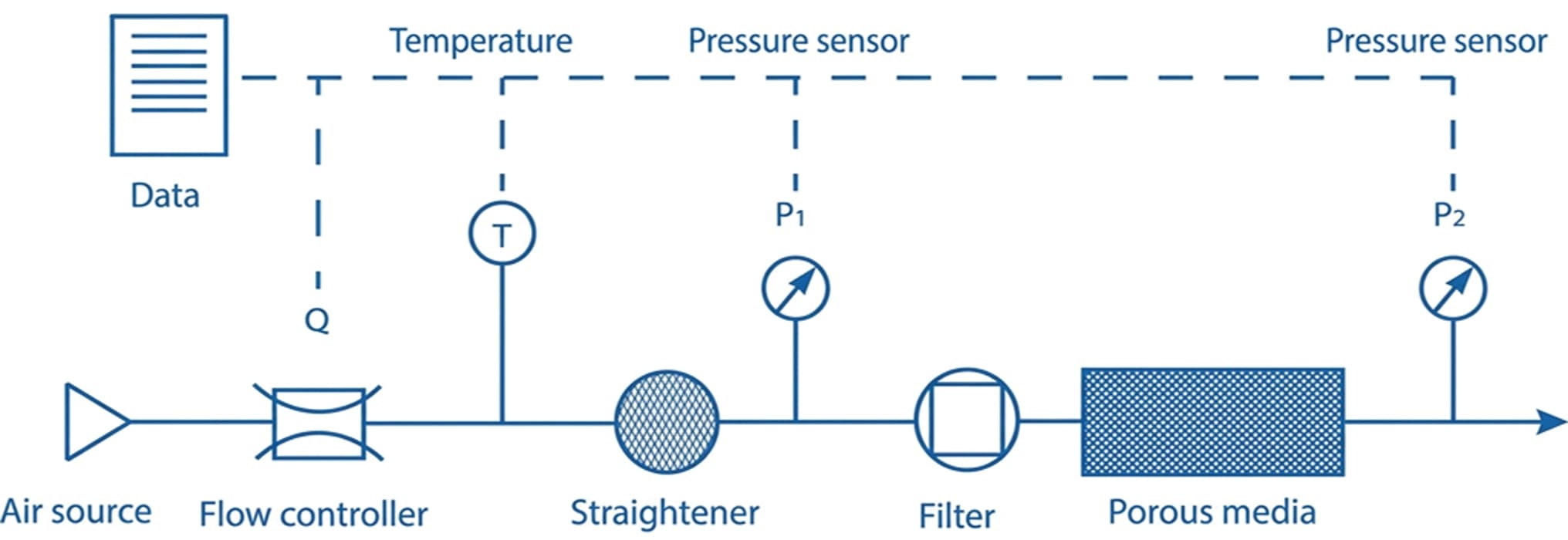
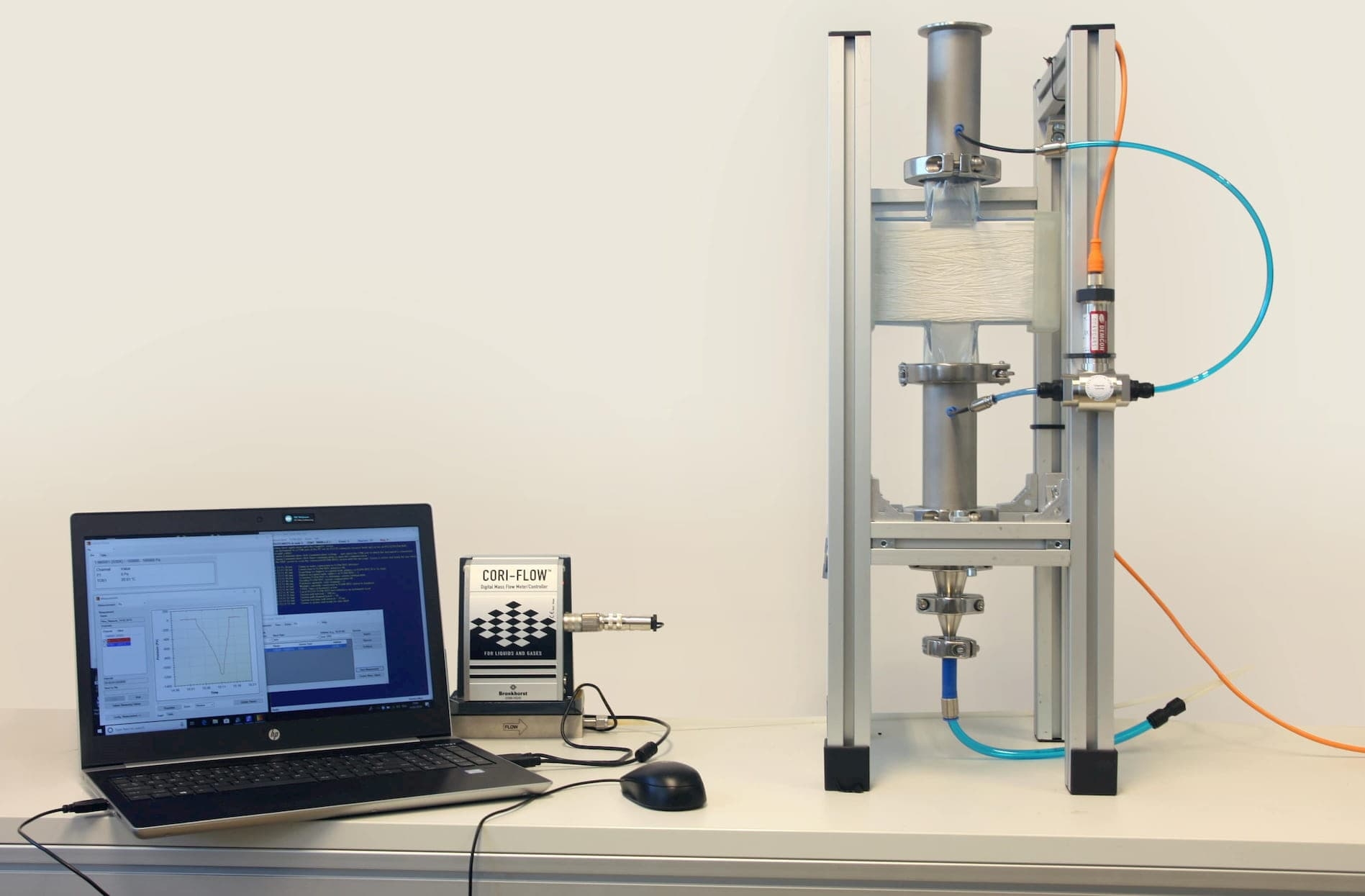
If the material of the porous component to be analyzed is already produced and easily available, an experimental setup is a fast and reliable way to obtain flow characteristics. In several projects, we used the setup shown in Figure 1, to experimentally measure the pressure loss through a porous medium. From the experimental data, the relation between pressure drop, flow rate and material length can be extracted.
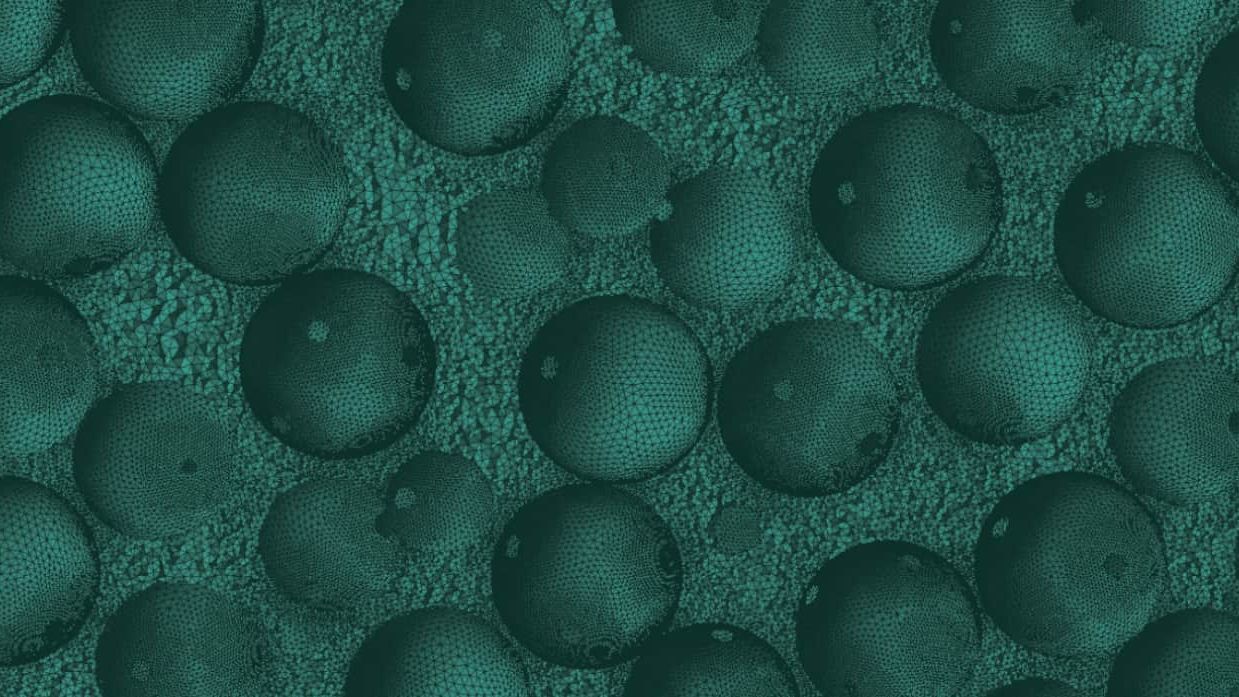
If the porous material is not physically available or is still conceptual, a micro-scale simulation of the porous material can be used. To this end, some knowledge of the material structure is needed.
Figure 2 shows the result of a particular micro-flow simulation (fluid flow velocity). Here, the flow was modelled through only a small part of the total material, incorporating a suitable void fraction and grain or pore size. Again, the relation between pressure drop, flow rate and length of the material is derived and scaled to match the total porous component.
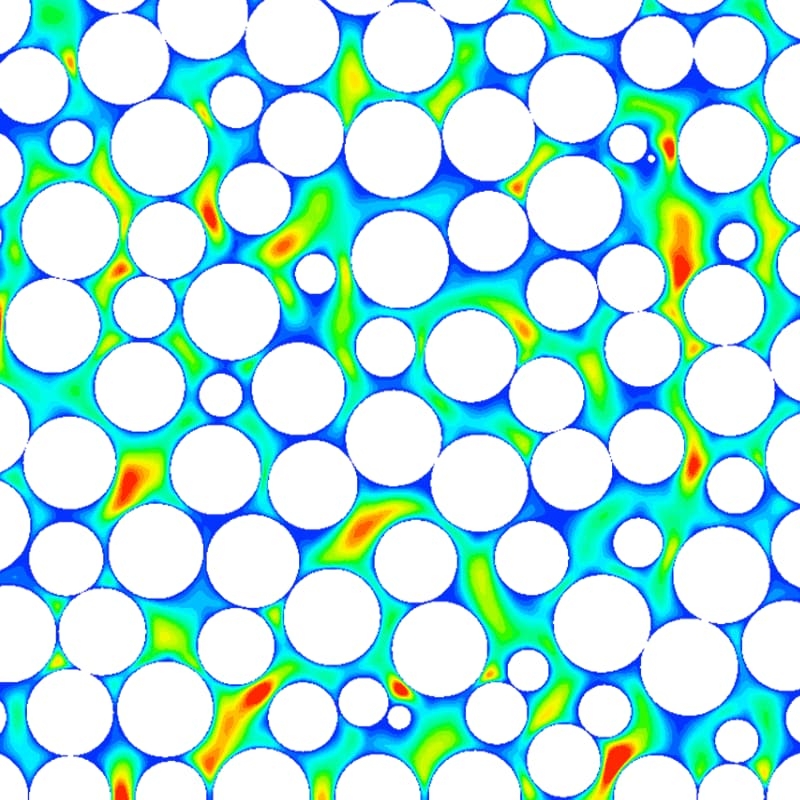
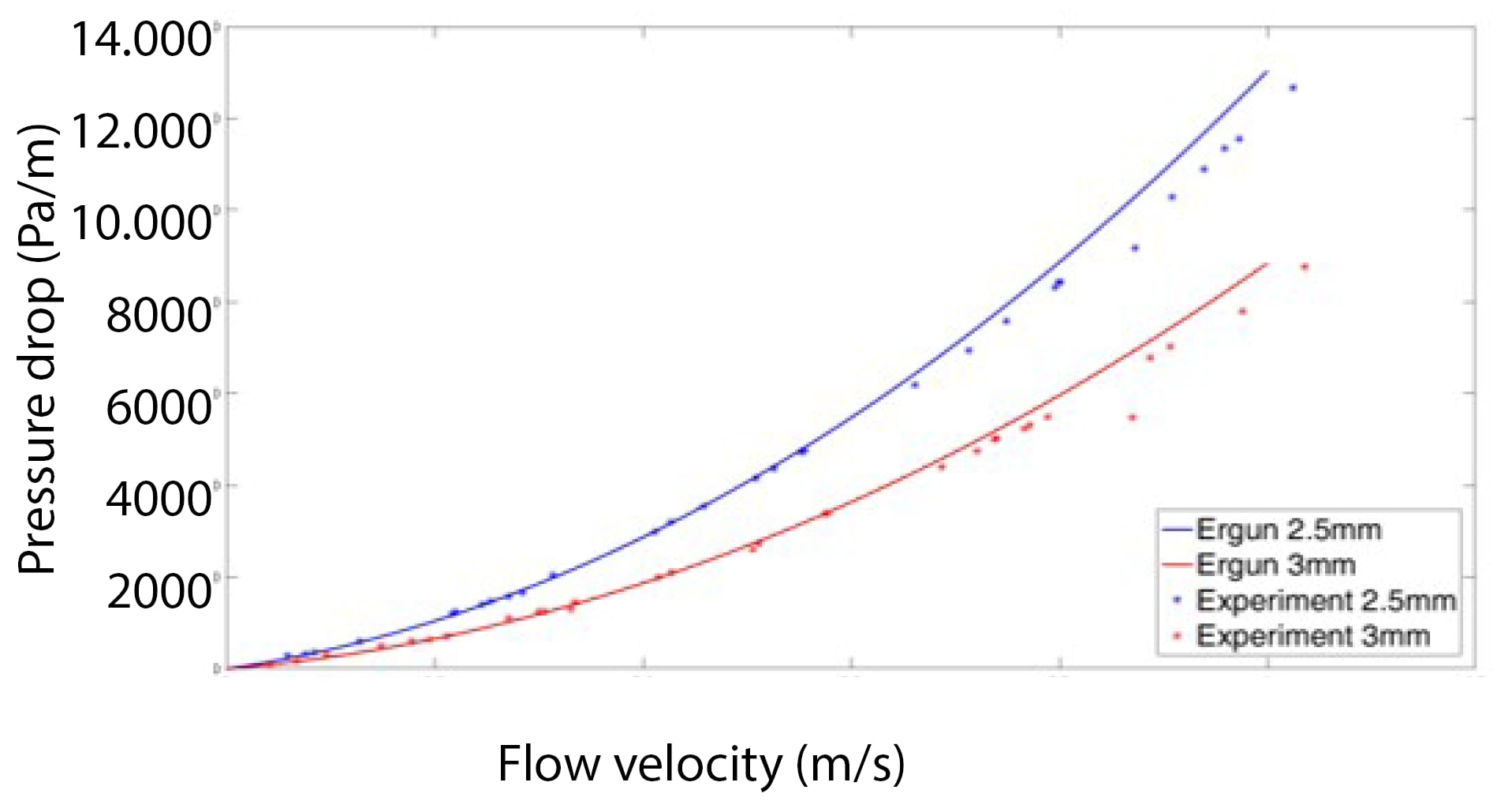
The next step in analyzing a porous medium, is to compare the obtained characteristics from either an experiment or simulations to analytical relations for porous flow, such as Darcy’s law or the Ergun equation. For the example in Figure 2, we were able to find a good match between the simulation and the Ergun equation, validating the performed simulation. Additionally, the micro-scale simulation results matched experimental data as well (Figure 3). Hence, we can conclude that a numerical approach works well in this case.
Replacing the porous component by a ‘black box’ with the obtained flow characteristics, saves extensive simulation effort in the analysis of the larger system. This can be implemented both in a system analysis (Figure 4) as well as in a macro-scale CFD simulation.